


.png)







February 12, 2026
Solar Screens vs. Regular Bug Screens: What’s the Difference for Arizona Homes?
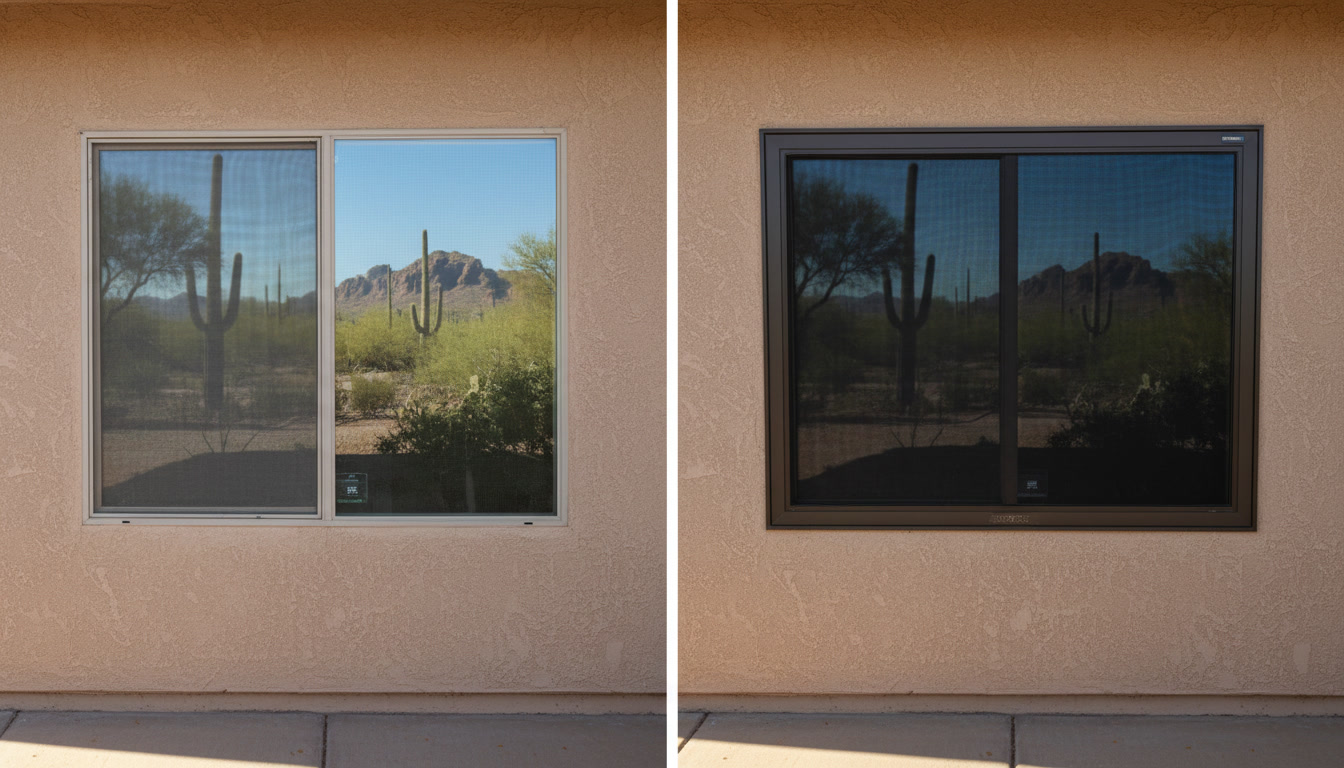
If you live in Arizona, choosing between a solar screen and a regular bug screen can make a big difference in comfort, cooling costs, and sunlight control.
Here’s a clear breakdown of how they compare — and which one is right for your home.
What Is a Regular Bug Screen?
A standard window bug screen is designed primarily to:
- Keep insects out
- Allow fresh air in
- Maintain visibility
- Provide minimal airflow resistance
What It Does Well
- Great ventilation
- Clear outward visibility
- Affordable option
- Ideal for mild climates
What It Doesn’t Do
- Does not block significant heat
- Offers little UV protection
- Does not reduce glare
- Does not significantly lower indoor temperatures
Bug screens are typically made from lightweight fiberglass or aluminum mesh. They’re excellent for airflow but provide very little protection from Arizona’s intense sun.
What Is a Solar Screen?
A solar screen is specifically engineered to reduce heat and sunlight entering your home.
Solar screens are made with thicker, denser mesh designed to block solar radiation before it hits your window glass.
Textilene Solar Screen Options
Solar screens commonly come in:
- 80% blockage (blocks ~80% of solar heat and UV rays)
- 90% blockage (blocks ~90% of solar heat and UV rays)
They are also available in various shade colors, including:
- Black
- Brown
- Beige
- Gray
Darker shades often provide better outward visibility while still reducing glare.
How Solar Screens Help Keep Your Home Cooler
Arizona heat is intense — especially in summer months when sunlight directly hits windows for hours.
According to energy efficiency studies:
- Up to 30% of a home’s cooling energy can be lost through windows.
- Solar screens can block 80–90% of solar heat gain before it enters the home.
- Exterior shading (like solar screens) is significantly more effective than interior blinds because it stops heat before it reaches the glass.
Benefits of Solar Screens:
- Reduce indoor temperatures
- Lower cooling costs
- Decrease glare
- Protect furniture and flooring from UV fading
- Improve daytime privacy
In many Arizona homes, installing solar screens on sun-facing windows can noticeably reduce room temperatures and make spaces more comfortable.
Side-by-Side Comparison
🪟 Regular Bug Screens
Best for: Basic airflow and insect protection
- ✔ Keeps bugs out
- ✔ Allows maximum airflow
- ✔ Clear visibility
- ✖ Does not block heat
- ✖ Offers little UV protection
- ✖ Does not reduce glare
- ✖ Does not lower cooling costs
Regular bug screens are lightweight and designed simply to keep insects out while letting fresh air circulate. They are ideal if your windows are shaded or don’t receive strong direct sunlight.
☀ Solar Screens (80% or 90%)
Best for: Heat reduction and energy efficiency
- ✔ Keeps bugs out
- ✔ Blocks 80–90% of solar heat and UV rays
- ✔ Reduces indoor temperatures
- ✔ Helps lower cooling costs
- ✔ Decreases glare
- ✔ Protects furniture and flooring from fading
- ✔ Adds daytime privacy
Solar screens use dense Textilene mesh and come in 80% or 90% blockage options, along with multiple shade colors. They are especially beneficial for west- and south-facing windows in Arizona homes where direct sun exposure is strongest.
Which One Is Right for Your Arizona Home?
Choose a regular bug screen if:
- Your main goal is airflow
- You don’t receive strong direct sunlight
- Budget is your primary concern
Choose a solar screen (80% or 90%) if:
- Your windows face west or south
- Rooms get hot in the afternoon
- You want to reduce cooling costs
- You want UV protection for interiors
- You want added daytime privacy
For most Arizona homes, solar screens are a smart upgrade — especially before peak summer heat hits.
Frequently Asked Questions
Does a 90% solar screen make the room dark?
It slightly reduces brightness but still allows natural light in. Many homeowners prefer 90% on west-facing windows for maximum heat reduction.
Can you see out of solar screens?
Yes. Darker colors typically provide better outward visibility while limiting inward visibility during the day.
Do solar screens replace window tint?
They serve a similar purpose but work from the exterior, which is often more effective for heat reduction.
Final Thoughts
If you’re simply looking to keep bugs out, a regular screen works fine.
But if you want to:
- Keep your home cooler
- Reduce energy bills
- Protect your interior
- Improve comfort during Arizona summers
A solar screen in 80% or 90% textline is a powerful upgrade.
Installing before peak heat season ensures better scheduling availability — especially during Arizona’s busy home improvement months.