


.png)







How Solar Screens Reduce the Heat Coming Into Your Phoenix Home
How Solar Screens Reduce the Heat Coming Into Your Phoenix Home
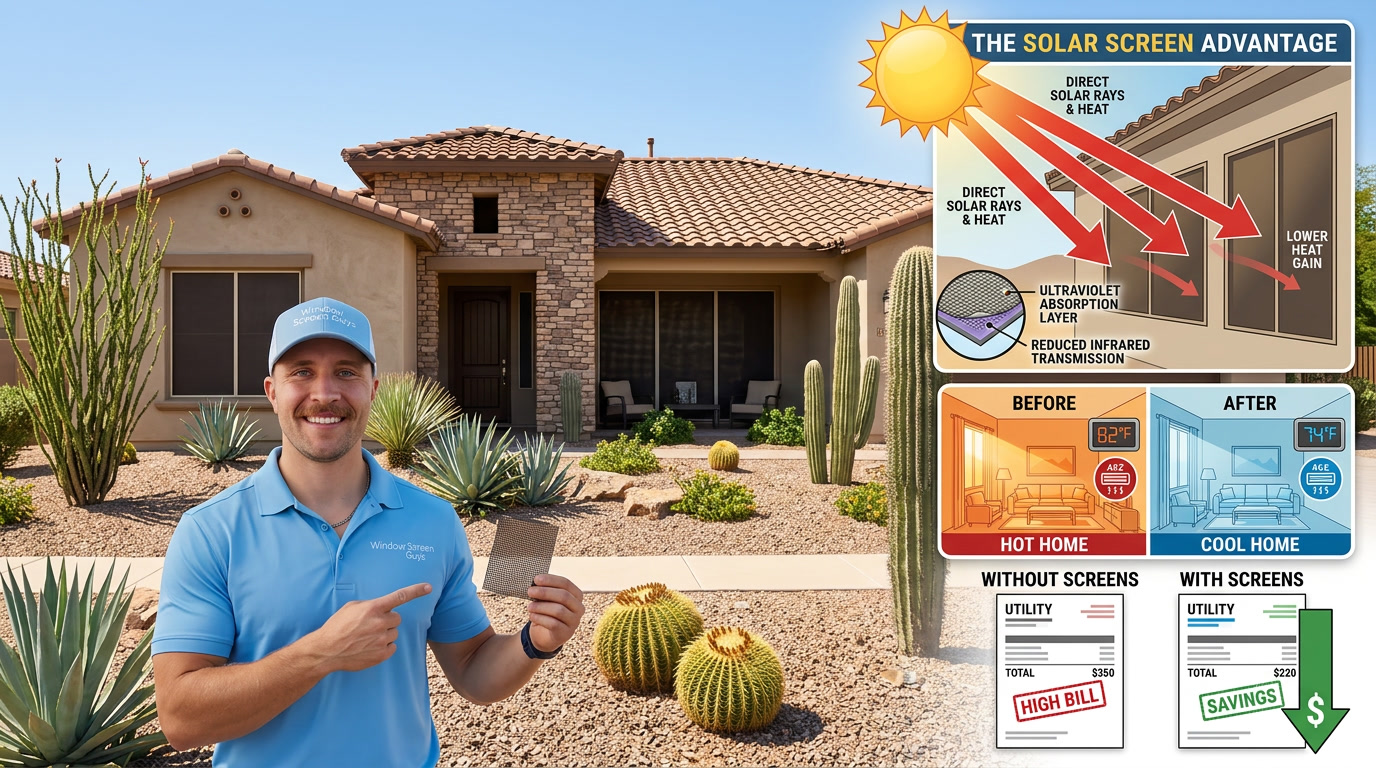
Direct answer: Solar screens reduce heat in Phoenix homes by mounting a densely woven mesh on the exterior of windows, blocking up to 90% of solar radiation before it ever reaches the glass — lowering interior temperatures by as much as 15°F and reducing air conditioning costs by up to 25%.
When the thermometer hits 115°F in Phoenix, every BTU of heat that gets through your windows is another dollar spent running your air conditioner. Understanding how heat enters your home through glass — and how a solar screen stops it — is the first step toward a smarter, cooler summer.
The Problem: Your Windows Are Heat Funnels
Glass is an excellent conductor of solar radiation. When sunlight hits a window, visible light passes through and converts into infrared (heat) energy inside your home. This process is measured by the Solar Heat Gain Coefficient (SHGC) — a number between 0 and 1 where lower means less heat gain. Standard residential windows have an SHGC of 0.25–0.60. In a Phoenix summer with 299 sunny days per year, even a “good” window lets in enormous heat during long afternoon sun exposure.
The Solution: Block Heat Before It Hits the Glass
Exterior solar screens work outside the glass. By mounting a densely woven mesh screen on the exterior window frame, you intercept the sun's rays before they touch the glass. The screen absorbs and disperses the energy into the air gap between screen and window, rather than transferring it into your interior.
This is fundamentally different from window tint or interior blinds, which allow heat to pass through the glass before trying to slow it. Research consistently shows exterior solar screens outperform tint and interior treatments for heat reduction — precisely because of this exterior-first mechanism. Window Screen Guys installs all solar screens on the exterior of the window for maximum performance.
Solar Screen Density: What 80% vs. 90% Means
Solar screens come in different “openness factors” — how tightly woven the mesh is. Window Screen Guys uses Phifer SunTex 80 and SunTex 90, the industry-standard materials for hot desert climates like Phoenix, AZ:
SunTex 80 — Blocks 80% of solar radiation. Slightly better outward visibility. A good choice for windows where view preservation is a priority.
SunTex 90 — Blocks 90% of solar radiation. Maximum heat reduction. The most popular choice for west- and south-facing windows in Phoenix, where afternoon sun is most intense.
A 90% screen blocks 90 out of every 100 units of solar radiation — meaning far less heat gain, significantly less AC runtime, and noticeably cooler rooms near windows even when the sun is blazing outside.
UV Protection Benefits
Beyond temperature, solar screens block 80–90% of harmful UV rays that cause fading and degradation of flooring, furniture, artwork, and drapes. The Skin Cancer Foundation notes that UV exposure through windows contributes to skin damage even indoors. Solar screens address this invisible hazard alongside the obvious heat problem.
Daytime Privacy
Because the outside of your home is brighter than the inside during daylight hours, solar screens act as a one-way privacy filter: you see out clearly, but people outside cannot easily see in. It's like wearing sunglasses on your house.
Frequently Asked Questions About Solar Screen Heat Reduction
How do solar screens reduce heat in a home?
Solar screens are installed on the exterior of windows, intercepting solar radiation before it reaches the glass. The tightly woven mesh absorbs and deflects UV and infrared energy, preventing heat from transferring into the interior. This mechanism is more effective than interior shades or window film because it stops heat at the source, outside the glass.
Should solar screens be inside or outside the window?
Always outside (exterior). Exterior solar screens block heat before it reaches the glass, which is significantly more effective than any interior treatment. Window Screen Guys installs all solar screens on the exterior for maximum performance.
What is the difference between 80% and 90% solar screens?
An 80% solar screen blocks 80% of solar radiation with slightly better outward visibility. A 90% screen blocks more heat with a modest reduction in visibility. For Phoenix's intense solar exposure, most homeowners choose 90% on west- and south-facing windows, where afternoon heat gain is greatest.
How much can solar screens lower the temperature inside a home?
High-quality solar screens can reduce interior temperatures near windows by up to 15°F, according to research by Arrowhead Solar Screen and Phifer Inc. The effect is most dramatic on west- and south-facing windows during afternoon sun exposure in Phoenix summers.
How long do solar screens last in Arizona?
Phifer SunTex solar screen materials carry a 10-year manufacturer warranty. In Arizona's intense UV environment, properly installed solar screens typically last 7–15 years depending on exposure and maintenance.
Do solar screens work in winter in Phoenix?
Yes. Solar screens continue to provide UV protection year-round. In Phoenix's mild winters, they also help retain indoor heat without the significant winter heat-loss penalty seen in colder climates. Many Phoenix homeowners leave their solar screens in place year-round.