


.png)







Best Window Screen Material for Hot Climates
Best Window Screen Material for Hot Climates
If you live in Southern California, Arizona, Texas, or anywhere the sun beats down relentlessly, your window screens need to do more than just keep bugs out. The right screen material can reduce heat gain, block UV rays, cut glare, and lower your energy bills — while still letting fresh air in.
Here’s a breakdown of the best window screen materials for hot climates.
1. Solar Screens (Best for Heat & UV Blocking)
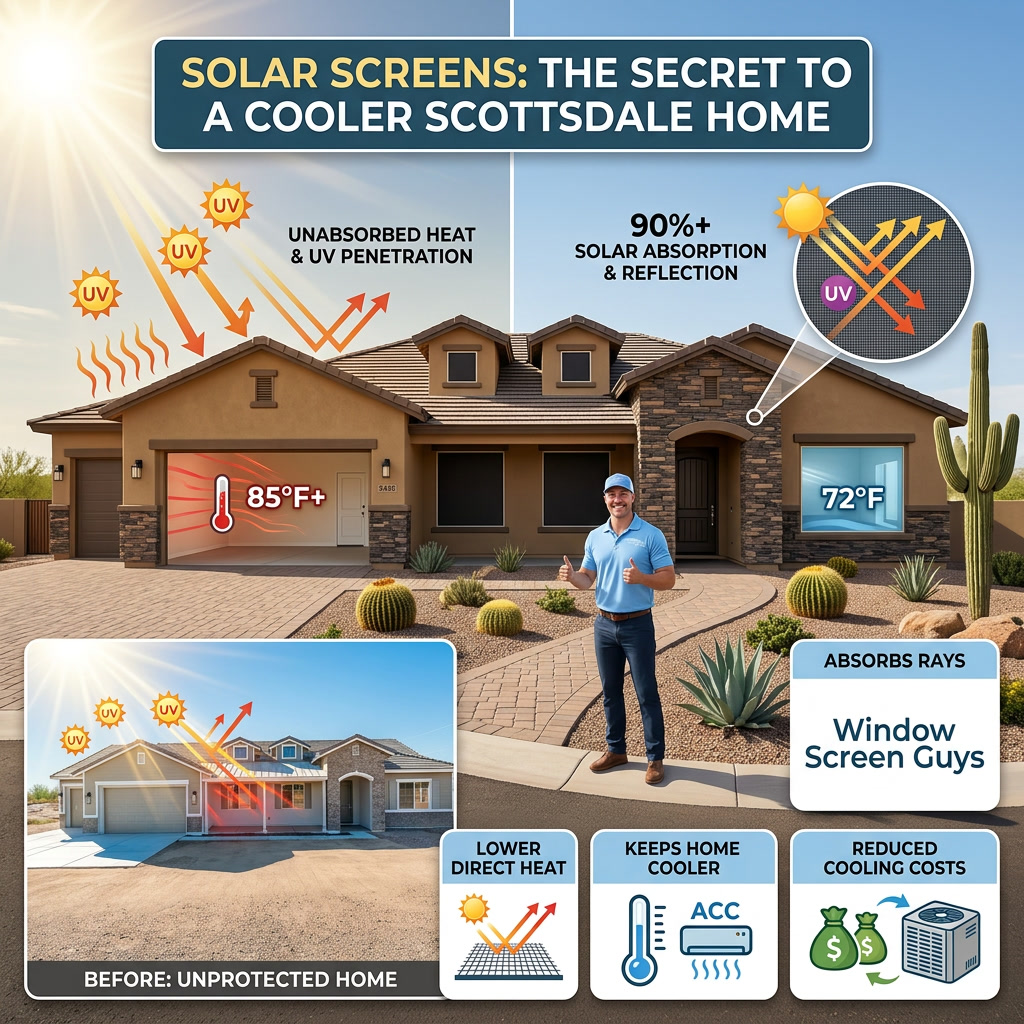
Solar screens are hands-down the top choice for hot climates. Made from a tightly woven, PVC-coated polyester mesh, they’re specifically designed to block solar heat before it enters your home.
- Blocks: Up to 90% of UV rays and significant solar heat
- Great for: West- and south-facing windows
- Tradeoff: Slightly reduced visibility and natural light
- Lifespan: 10–15+ years
Solar screens can reduce indoor temperatures noticeably and may lower air conditioning costs — making them a smart long-term investment for SoCal homeowners.
2. Fiberglass Screens (Best Value)
Fiberglass is the most common window screen material, and for good reason. It’s affordable, flexible, and won’t oxidize or corrode in coastal or dry climates.
- Best for: General use, budget-conscious homeowners
- Heat blocking: Minimal — this is standard insect screening
- Durability: Good, but can sag over time in large frames
While fiberglass doesn’t offer the heat-blocking benefits of solar screens, it’s a solid choice for rooms where glare and heat gain aren’t major concerns.
3. Aluminum Screens (Best for Durability)
Aluminum screens are more rigid than fiberglass and hold their shape better over time. They’re a popular choice in windy or high-traffic areas.
- Best for: High-wind areas, larger windows
- Heat blocking: Minimal — similar to fiberglass
- Tradeoff: Can oxidize near the coast; dents more easily than fiberglass
4. Phifer SunTex & BetterVue (Premium Options)
Brands like Phifer offer specialty screen fabrics designed specifically for hot, sunny climates. Products like SunTex 80 or SunTex 90 offer solar control in different opacity levels — allowing you to balance visibility with heat reduction.
5. Pet-Resistant Screens in Hot Climates
If you have pets and live in a warm climate, pet-resistant screens made from heavy-duty polyester are a great option. They won’t keep out heat, but they’ll survive excited dogs and cats better than standard mesh.
What’s the Best Screen Material for Southern California?
For most SoCal homes, solar screens offer the best combination of heat reduction, UV protection, and longevity. Pair them with standard fiberglass screens on north-facing or shaded windows for a cost-effective whole-home solution.
Frequently Asked Questions
Do solar screens really keep a house cooler?
Yes. Solar screens can block a significant amount of solar heat before it enters your home through windows, reducing the workload on your air conditioning system.
What window screen is best for coastal California?
Fiberglass is best for coastal areas because it won’t corrode or oxidize from salt air. Aluminum can rust near the ocean over time.
Can I use solar screens on all my windows?
Yes, though some homeowners prefer not to install them on north-facing windows where glare and heat gain are less of an issue.
Ready to Upgrade Your Window Screens?
Window Screen Guys installs solar screens, fiberglass, aluminum, pet screens, and more throughout Southern California. Contact us today for a free consultation and estimate.