
HOA Rules and Solar Screens in the Phoenix Valley: What You Can and Can't Install
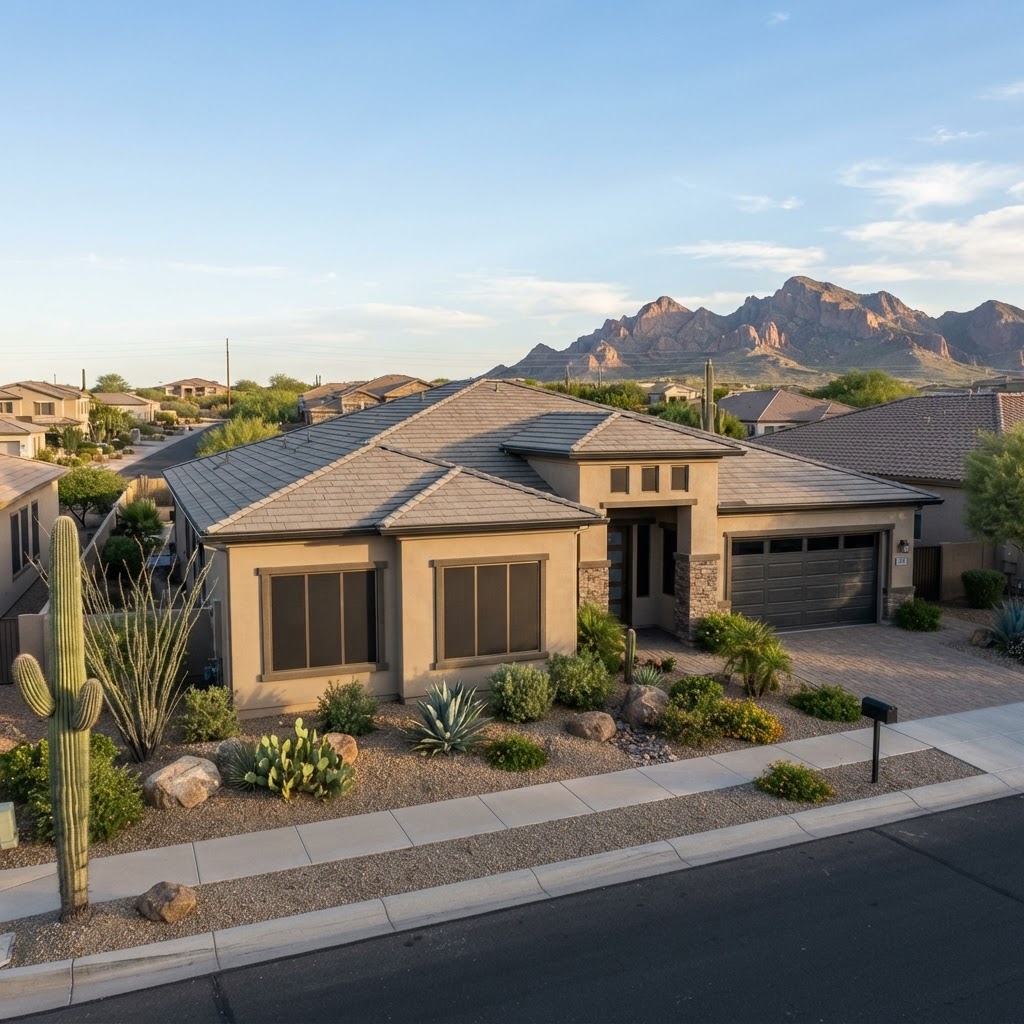
Most Phoenix Valley HOAs permit solar screens but regulate their appearance — frame color, mesh color, and which elevations they can go on. Very few communities ban them outright. Almost all of them will send a violation letter if you install non-conforming screens on a street-facing window without approval.
The practical result: the decision you need to get right isn't whether you can install solar screens, it's which screens, on which windows, and in what order you file the paperwork.
What HOAs Typically Regulate
Across Valley communities, the recurring restrictions are:
Frame color. By far the most common rule. Many CC&Rs require frames to match existing window trim or the home's approved exterior palette. Bronze and white are the usual approved colors; mill-finish aluminum is frequently prohibited on front elevations.
Mesh color. Charcoal and bronze mesh are widely accepted. Lighter or unusual mesh colors are more likely to be rejected because they read as inconsistent from the street.
Which elevations. Some communities allow solar screens freely on side and rear windows but require architectural approval — or prohibit them — on street-facing windows. This is the rule most homeowners discover after installation.
Full-window vs. partial coverage. A few CC&Rs require screens to cover the full window opening rather than a portion, for visual consistency.
Uniformity across the elevation. If you screen three of five front windows, some associations will cite you for inconsistent appearance even though each individual screen conforms.
What Arizona Law Does and Doesn't Cover
You'll hear homeowners say "Arizona law says my HOA can't stop me." That's worth being careful about.
Arizona statute does limit an association's ability to prohibit solar energy devices. But "solar energy device" is a defined term centered on equipment that collects, stores, or converts solar energy — rooftop solar panels and solar water heating, primarily. Exterior shade screens are generally treated as a shading product rather than a solar energy device, so homeowners shouldn't assume that protection applies to solar screens.
This is a question with real legal nuance, and we're a screen company, not a law firm. If your HOA has denied a solar screen request and you believe the denial is improper, that's a conversation for an Arizona attorney familiar with planned community law — not something to settle from a blog post.
The pragmatic path, in nearly every case, is to work within the architectural process rather than around it.
The Approval Process That Works
Homeowners who get approved on the first submission tend to do the same things:
1. Pull your actual CC&Rs and architectural guidelines. Not the HOA website summary — the recorded documents. Search them for "screen," "shade," "solar," "exterior modification," and "window covering." The relevant language is often in a design guidelines appendix rather than the CC&Rs themselves.
2. Get the spec sheet before you submit. Your architectural committee wants specifics: frame color and finish, mesh product and color, openness or shading percentage, and which windows. "Solar screens on the back of the house" gets a request for more information and burns a review cycle.
3. Include a photo. A photo of your home's affected elevation, plus a product photo or sample of the frame and mesh color, resolves most reviewer hesitation immediately.
4. Submit before you install. Retroactive approval is possible in many communities but is a much harder conversation, and some associations will require removal first regardless.
5. Ask about review timing. Many Valley architectural committees meet monthly and have 30 to 45 day response windows written into the governing documents. If you're trying to get screens up before summer, submitting in May is too late.
The Requests That Get Denied
Patterns we see:
- Mill-finish or unpainted aluminum frames on a front elevation
- Mesh color that doesn't match what neighbors have installed
- Screens on some but not all windows of a symmetrical front elevation
- Requests with no product specification attached
- Installation first, request second
None of these are about solar screens being unwelcome. They're about visual consistency, which is what architectural committees exist to enforce.
A Strategy That Sidesteps Most of It
Here's something worth knowing: the windows that benefit most from solar screens are usually not the ones HOAs care most about.
Heat load in Phoenix is overwhelmingly a west and south exposure problem. Afternoon sun on west-facing glass is where the cooling-bill damage happens. North-facing windows get almost no direct sun and generally aren't worth screening at all.
If your front elevation faces north or east — common in a lot of Valley subdivisions — you may get nearly all the thermal benefit from screening rear and side windows that are far less regulated. Screening the front for uniformity becomes an aesthetic choice rather than a performance requirement.
We measure exposure per window for exactly this reason. It's common to find that the four windows actually driving a homeowner's summer electric bill are all on elevations the HOA barely regulates.
Frame and Mesh Options That Clear Review
For Valley communities, the combinations that most reliably get approved:
- Frame color — Safe choice: Bronze or white, matched to existing trim · Riskier choice: Mill finish, black, custom colors
- Mesh color — Safe choice: Charcoal or bronze · Riskier choice: Light gray, tan, unusual colors
- Coverage — Safe choice: Full opening · Riskier choice: Partial or half-window
- Elevation consistency — Safe choice: All windows on a given elevation · Riskier choice: Selective front-elevation screening
- Density — Safe choice: Consistent across visible elevation · Riskier choice: Mixed openness visible from street
Note that last row: it's fine to vary screen density by exposure for performance, but keep the visible elevation consistent. Different densities on the same front-facing wall can read as mismatched.
We'll Spec It for Your Submission
Window Screen Guys builds and installs custom solar screens across Phoenix, Scottsdale, Peoria, Surprise, Glendale, Anthem, Cave Creek, Sun City, and the surrounding Valley — in 80% and 90% Textilene, with multiple frame and mesh color options. We'll measure your home, identify which windows are actually driving your heat load, and give you a written spec with colors and coverage that you can attach directly to an architectural request. Licensed Arizona contractor, ROC #362719.
Call (480) 771-6091 or request a free on-site quote.
Already approved and know your measurements? Configure frame color, mesh type, and sizes yourself at Screens2Go.
Frequently Asked Questions
Can my HOA stop me from installing solar screens in Arizona?
Most Valley HOAs permit solar screens but regulate appearance — frame color, mesh color, and which elevations. Outright bans are uncommon. Arizona law limits HOA restrictions on solar energy devices, but shade screens are generally treated as a shading product rather than a solar energy device, so don't assume that protection applies. If you've been denied and think it's improper, consult an Arizona attorney familiar with planned community law.
Do I need HOA approval before installing solar screens?
In most Phoenix Valley communities with an architectural review process, yes — especially for street-facing windows. Some associations allow rear and side elevation screens without submission. Check your recorded CC&Rs and design guidelines rather than relying on the HOA website summary, and submit before installing. Retroactive approval is a much harder conversation.
What solar screen frame color is most likely to be HOA approved?
Bronze and white are the most widely accepted, particularly when matched to the home's existing window trim. Mill-finish or unpainted aluminum is frequently prohibited on front elevations. For mesh, charcoal and bronze are the standard approved colors in most Valley communities.
How long does HOA approval for solar screens take?
Many Valley architectural committees meet monthly and have 30 to 45 day response windows written into their governing documents. If you want screens installed before peak summer heat, submit in late winter or early spring rather than May.
Can I install solar screens on only some windows?
Performance-wise, yes — and it's often smart, since west and south windows drive most of the heat load while north-facing windows benefit little. The HOA consideration is visual consistency: screening some but not all windows on a symmetrical front elevation draws violation letters in some communities. Rear and side elevations are usually more flexible.
Which windows should I screen if my HOA restricts the front of my house?
Focus on west and south-facing windows, which carry the overwhelming majority of Phoenix heat load. If your front elevation faces north or east, you can often capture nearly all the cooling benefit by screening rear and side windows that are far less regulated. A per-window exposure assessment will tell you exactly where the value is.
Need help with your windows?
Shop Screens2Go