
Fiberglass vs. Aluminum Window Screen Mesh: Which Holds Up Better in the Phoenix Valley?
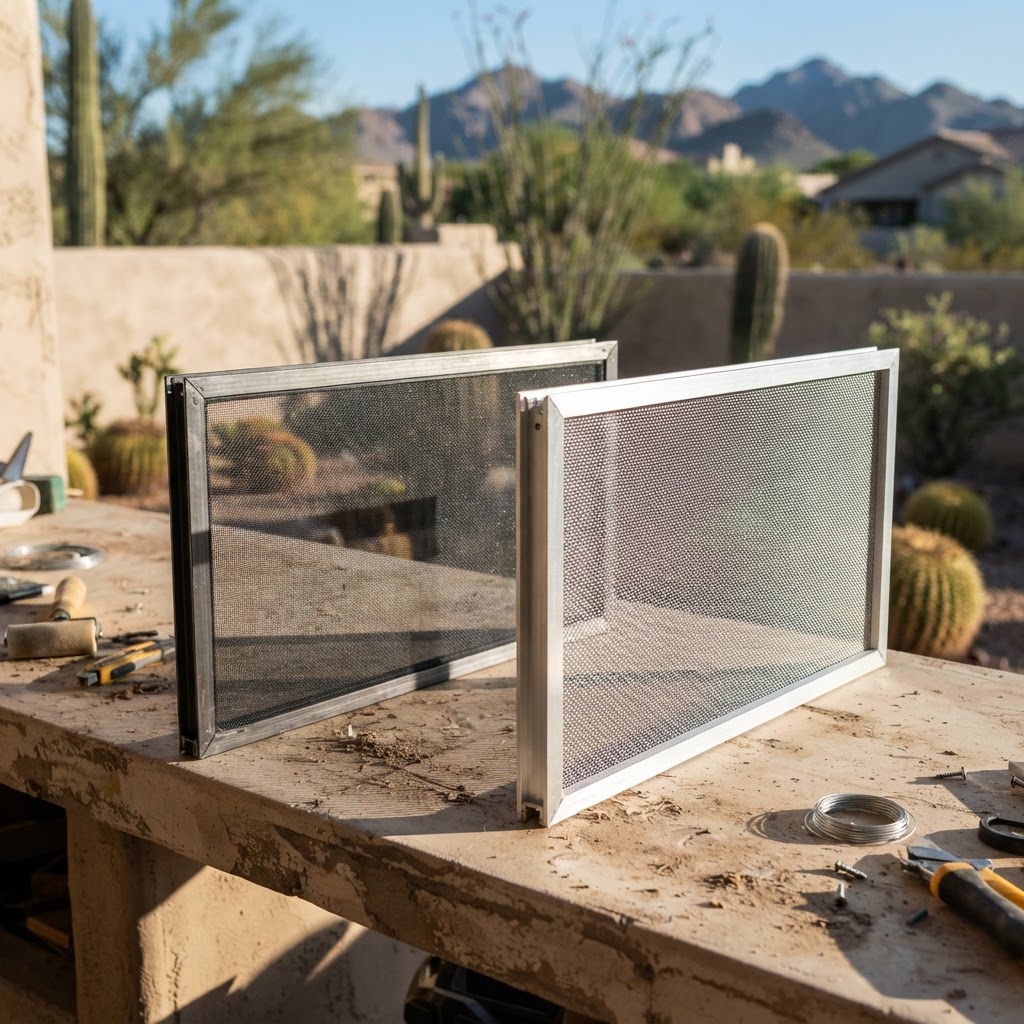
When it's time to replace a window screen, most Phoenix Valley homeowners don't think much about the mesh itself — until it fails again a year later. The two materials you'll be choosing between are fiberglass and aluminum, and in a climate this extreme, that choice matters more than it does almost anywhere else in the country.
Fiberglass Mesh: Flexible, Affordable, UV-Resistant
Fiberglass is the standard mesh on most new-construction homes across Scottsdale, Glendale, Peoria, Surprise, and Cave Creek. It's woven from vinyl-coated fiberglass strands, which makes it:
- Flexible — it bows outward under wind or a bump instead of bending permanently
- Affordable — typically the lower-cost option per screen
- UV-stable — quality fiberglass mesh resists the sun-brittling that ruins cheaper screens
- Quiet — it doesn't hum or rattle in gusty pre-monsoon wind the way loose aluminum can
The tradeoff: fiberglass is easier to tear. A determined pet, a stray golf club, or a haboob-driven branch can punch through it. It also sags slightly over years of 110°F+ heat cycling, which is why re-screening every several years is normal maintenance here, not a sign anything went wrong.
Aluminum Mesh: Rigid, Long-Lasting, Less Forgiving
Aluminum mesh is woven from fine metal strands and holds its shape far more rigidly than fiberglass. That gives it real advantages in specific spots:
- Tear resistance — much harder to puncture, which matters for ground-floor windows, patios, and pet-heavy households
- Shape retention — it won't sag or billow over time
- Longevity — a well-installed aluminum screen can outlast several rounds of fiberglass replacement
The catch in Arizona specifically: aluminum dents and creases permanently instead of springing back, so a hard hit leaves a visible crease rather than just a small tear. It also tends to show water spotting and light corrosion faster in homes near a pool or on properties that get heavy monsoon rain runoff, and dark aluminum (charcoal/black) mesh runs slightly hotter to the touch under direct summer sun than fiberglass.
So Which One Should You Choose?
For most standard window screens across the Valley, fiberglass is still the practical default — it's affordable, UV-stable, and easy to replace in sections as needed. Aluminum is worth the upgrade for high-traffic spots: pet doors, ground-floor windows kids climb near, screen doors that get bumped daily, or any opening where durability matters more than replacement cost.
A few Phoenix-specific factors should tip the decision either way:
- West- and south-facing windows take the most UV and heat — quality fiberglass with UV inhibitors holds up fine here, and pairs well with a solar screen upgrade for homes fighting high cooling bills.
- Pool-adjacent screens see more moisture — ask about corrosion-resistant aluminum coatings if you go that route.
- Pet households almost always do better with aluminum or a dedicated pet-resistant mesh rather than standard fiberglass.
- Monsoon-exposed patios and screen doors benefit from aluminum's rigidity when wind-driven debris is a regular risk.
Get the Right Mesh for Your Home
Every window and door opening is a little different, and the right mesh often varies room to room in the same house. Window Screen Guys custom-builds and installs both fiberglass and aluminum window screens throughout the Phoenix Valley, and can walk your home to recommend the right material for each opening.
If you'd rather order and swap screens yourself, you can build and check out a custom screen order directly through our sister site, Screens2Go, with pickup and delivery routes running Valley-wide.
Ready for a professional recommendation instead? Request a free quote and we'll help you match the right mesh to every window and door in your home.
Need help with your windows?
Shop Screens2Go